PHP 8: It’s Time to Upgrade the Web
Why keeping your PHP Version up to date actually matters
PHP is the programming language that powers the modern internet. In fact, nearly 80% of all websites use it in some way. This language serves as the foundation for WordPress and Drupal, which are the world’s most popular open-source Content Management Systems (CMSs). Because it is easy to learn and widely supported by hosting platforms, it remains a top choice for developers.
Like other languages, PHP releases major updates every few years and minor security patches more frequently. Specifically, major version updates provide a window for developers to add new features and remove outdated ones. Since technology changes rapidly, these frequent updates are essential for a website to remain relevant and secure.
PHP 8.0 and the “End of Life” Risk
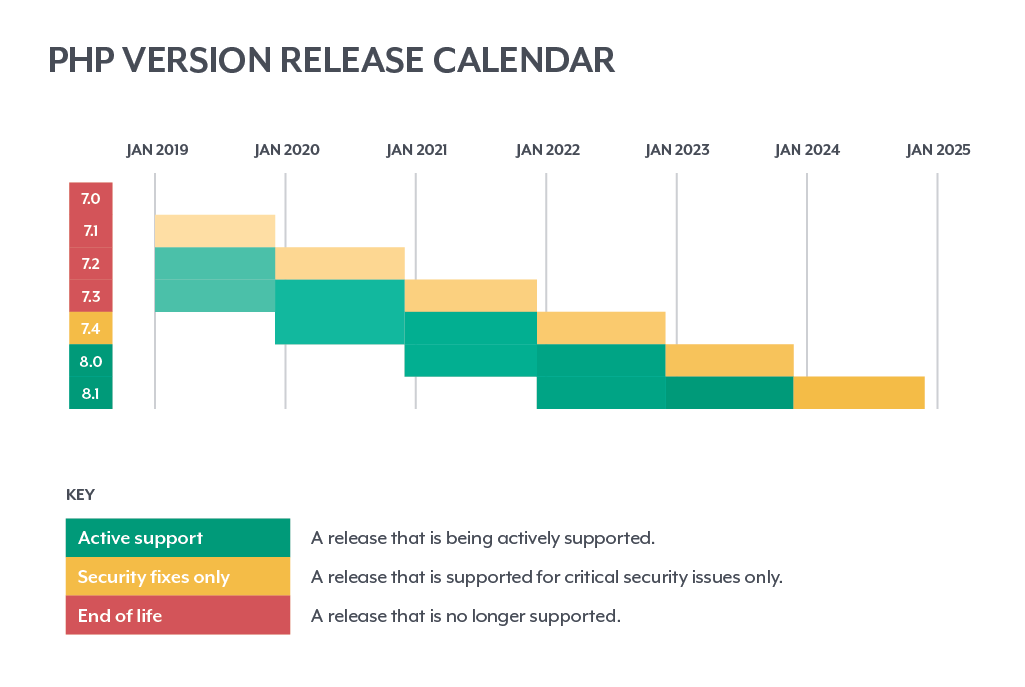
PHP 8.0 is the most recent major version, having launched in November 2020. According to PHP’s version support policy, each release receives active maintenance for two years and security updates for one additional year. Consequently, older versions like PHP 7.4 will no longer receive support after November 2022.
Running your site on an unsupported version creates significant security holes. However, PHP 8 also offers several features for non-developers. For instance, it includes improved error handling and faster performance. As a result, websites using PHP 8 are more stable than ever before.
Planning Your WordPress and Drupal Upgrades
Because major updates can change code syntax, you must plan your transition carefully. At Spry Digital, we monitor the update schedules for WordPress and Drupal closely. By doing this, we allow plenty of time to test code in development environments before updating live sites.
WordPress PHP upgrades
WordPress has been adding support for PHP 8 since the 5.6 release in 2020, shortly after PHP 8 came out. The core codebase is fully functional on PHP 8 (although you may still see some deprecation notifications in your server logs). However, plugin support for PHP 8 is entirely up to the plugin authors, so it’s essential to review all installed plugins to ensure they have been tested and work in PHP 8 environments.
Drupal PHP upgrades
Drupal 9 recommends using PHP 8, and Drupal 10 (coming out later this year) requires PHP 8.1, so current Drupal codebases must run on the latest versions of PHP. Given that Drupal 9 and 10 need at least PHP 8.0, the odds are good that the Drupal modules used by current D9 websites work well with PHP8, but any custom code should be reviewed and thoroughly tested. The Drupal community still supports Drupal 7 for security updates. Since keeping PHP up to date is a security concern, the community is working to keep D7 up to date with PHP. PHP 8 is supported now, and work is currently in progress for 8.1.
If you don’t have a trusted partner maintaining your website and are wondering what to do, reach out! Spry can provide guidance and perform security audits to determine any updates needed to keep your website secure.
Meet the author